
When using a CBN grinding wheel to grind high-speed steel tools,
after the wheel has been dressed with a roller or a silicon carbide wheel, the abrasive grains and the bond on the wheel surface lie flush—meaning the CBN grains do not protrude.
At this stage, the wheel's grinding performance is relatively poor; the specific surface topography of the wheel is as follows:

If we use a CBN grinding wheel to grind high-speed steel workpieces directly without dressing it, workpiece burning occurs.
However, after grinding a few workpieces using the same parameters, the surface topography of the wheel changes: the abrasive grains protrude relative to the bond, resulting in a more "open" wheel face.
At this stage, the burning phenomenon disappears, and the wheel's surface topography appears as follows:
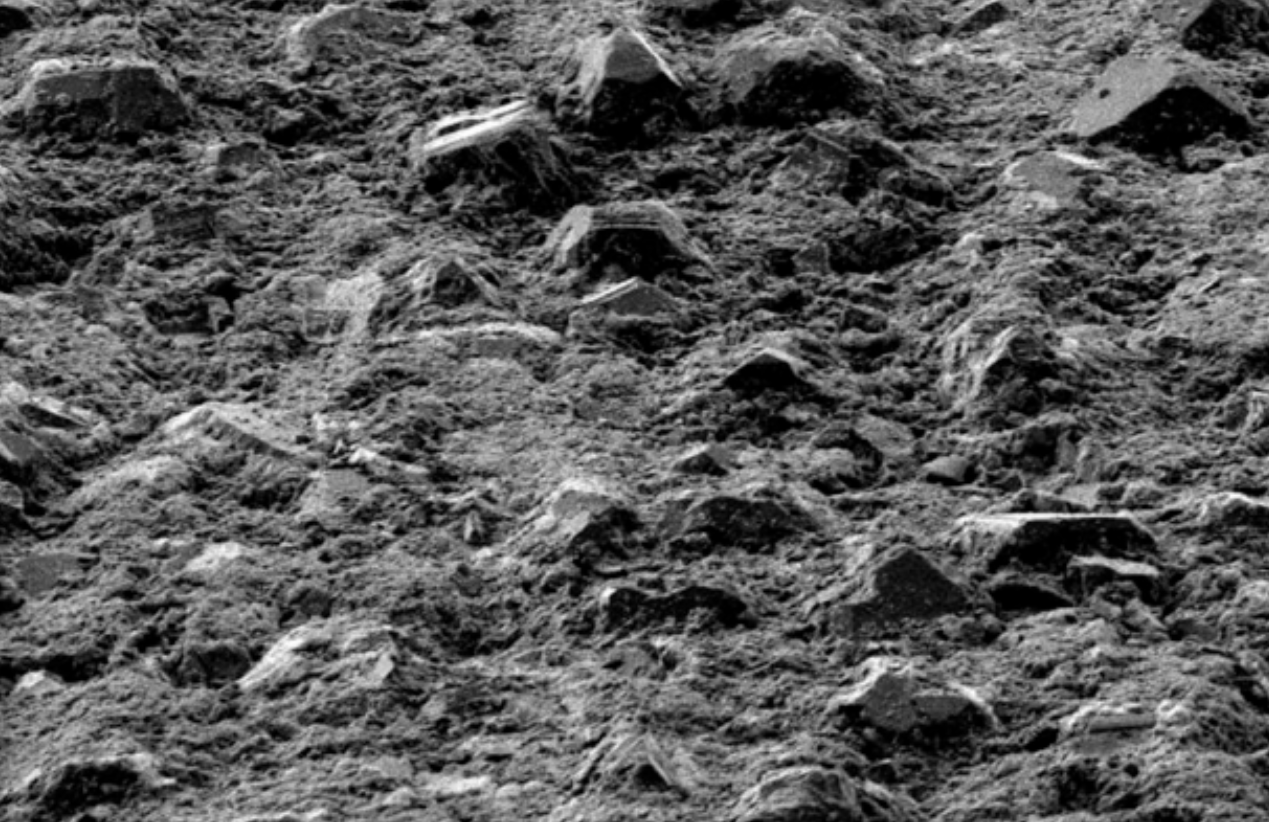
To achieve this state directly, we can perform a sharpening operation after dressing the CBN grinding wheel.
In actual production, if we wish to avoid burning the workpiece due to the condition of the CBN wheel—and if sharpening after dressing is inconvenient—we can reduce the feed rate while grinding the first few workpieces to prevent burn-related scrap.
After grinding a few workpieces, the wheel's surface topography will reach this desired (open) state; at that point, the feed rate can be increased to normal levels to proceed with standard production.
Load chart for slot milling of high-speed steel cutters:
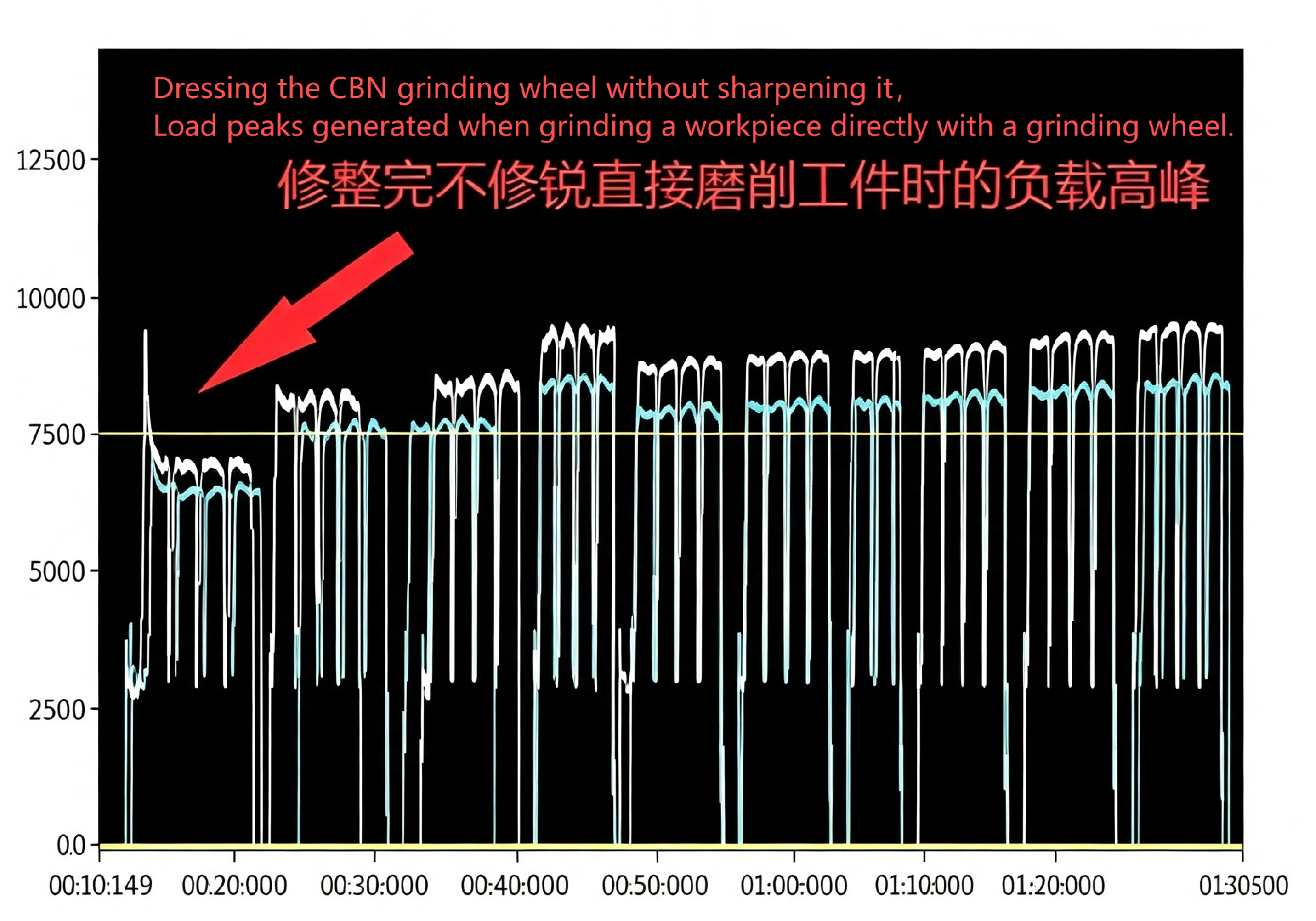
In the image above, since the CBN grinding wheel was not conditioned after dressing, the load on the first slot transitions from high to low and eventually stabilizes at a normal level during grinding; correspondingly,
the wheel surface morphology shifts from a "closed" state to an "open" state.
If the load becomes excessively high during this process, workpiece burning can occur; therefore, we reduce the feed rate or condition the wheel to lower the load and minimize scrap.
In the subsequent grinding stages, the load gradually increases as the number of ground parts rises and the abrasive grains wear down.
Once the load reaches a critical level, workpiece burning may occur again, necessitating wheel conditioning; if the wheel profile no longer meets specifications, re-dressing is required.